
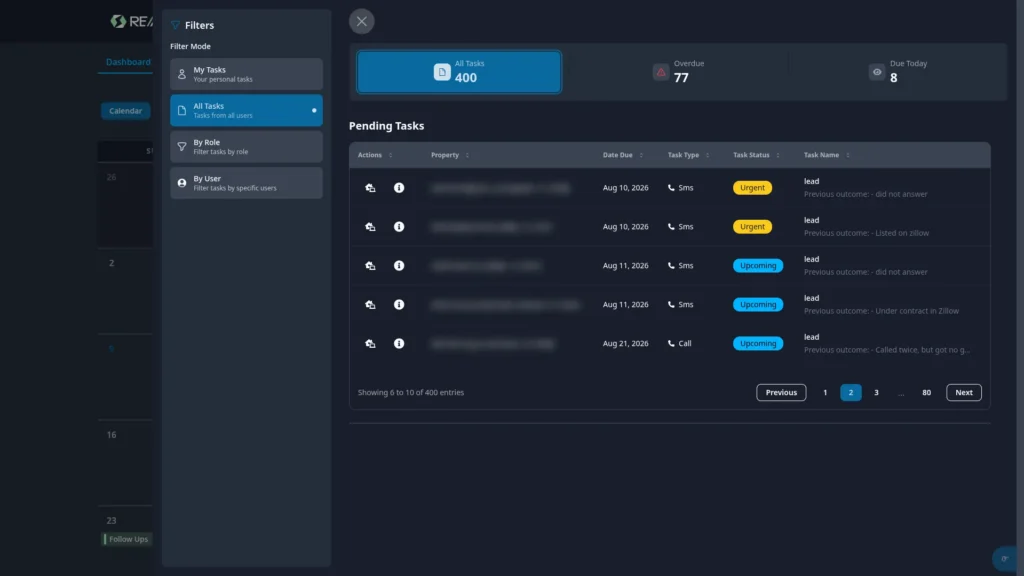
Every task exists to move a property forward.
RE/AMP makes ownership clear, keeps work moving from one person to the next, and records the activity that happens along the way.
Tasks aren’t just reminders sitting in a list. They’re part of the operational history of every property.
Real Estate Tasks Should Create Progress, Not Just Notifications
A task sitting untouched in someone’s inbox doesn’t help a deal move forward.
Without clear ownership and accountability, follow-ups get missed, responsibilities become unclear, and important work can disappear when someone leaves the company or hands a property to another team member.
RE/AMP treats tasks as part of the property workflow. Each task has an owner, a purpose, and a place in the history of the property.
Keep Every Property Moving Forward
RE/AMP is designed around a simple principle: completing work should lead to the next step.
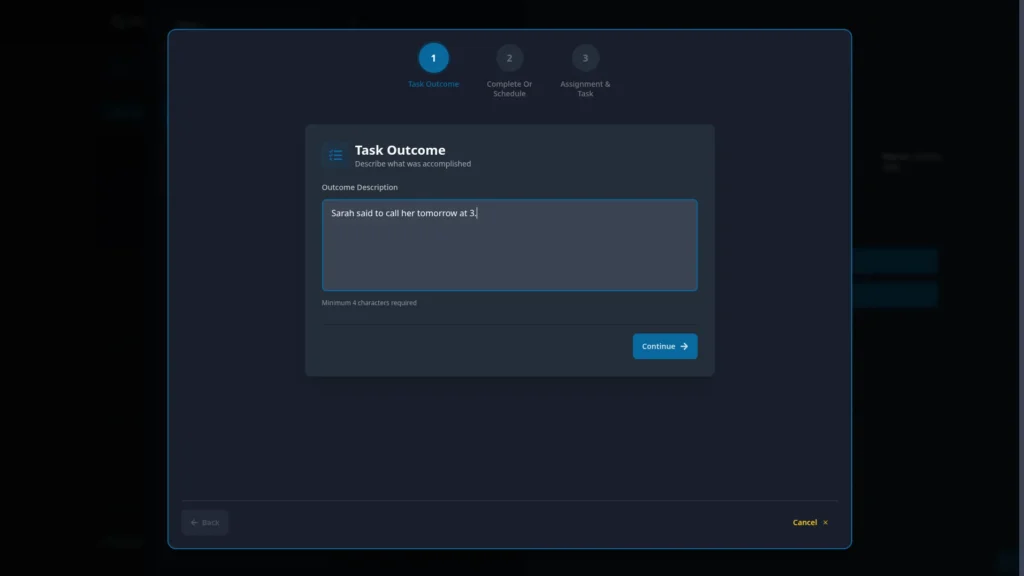
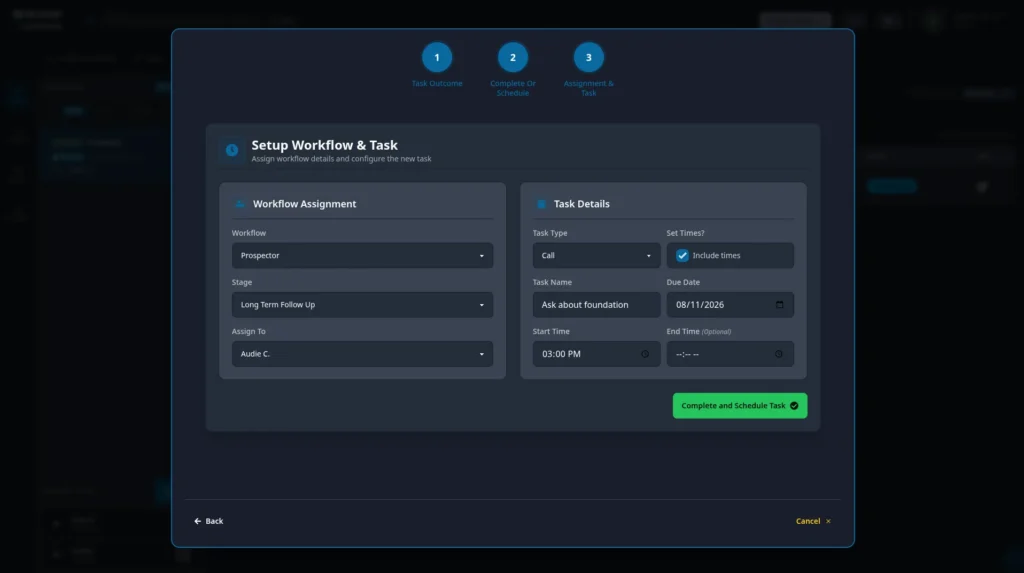
Depending on how your task type is configured, completing a task can require the user to schedule the next task or hand responsibility to another team member.
That means a task doesn’t simply disappear when someone clicks “complete.” The system helps ensure there is a clear next action or a deliberate handoff.
This creates a chain of responsibility that keeps properties moving without requiring managers to constantly check whether someone remembered to follow up.
Custom Task Types for the Way Your Team Works
Not every task is the same.
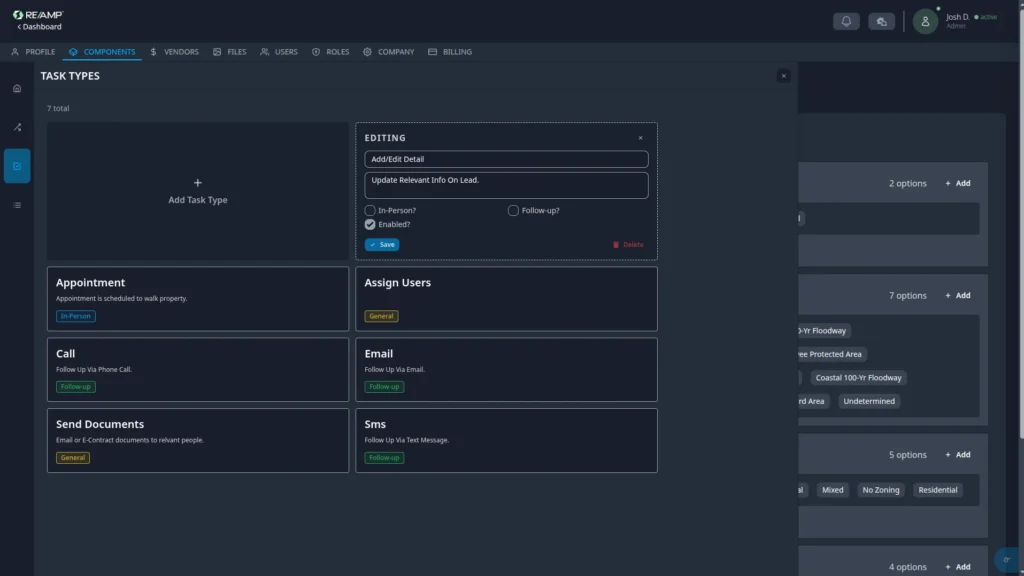
RE/AMP allows you to configure task types around the activities your team actually performs. For example, you may distinguish between follow-up tasks and in-person activities, giving your team a consistent way to identify and manage different types of work.
Task types can help your team understand what needs to happen without forcing every activity into the same generic task structure.
Whether the next action is a phone call, an appointment, an inspection, or another type of follow-up, your task system can reflect the way your business operates.
Reassign Responsibility Without Rebuilding Your Workflow
People change roles. Employees leave. New team members join.
Your task system shouldn’t become an administrative nightmare every time responsibility changes.
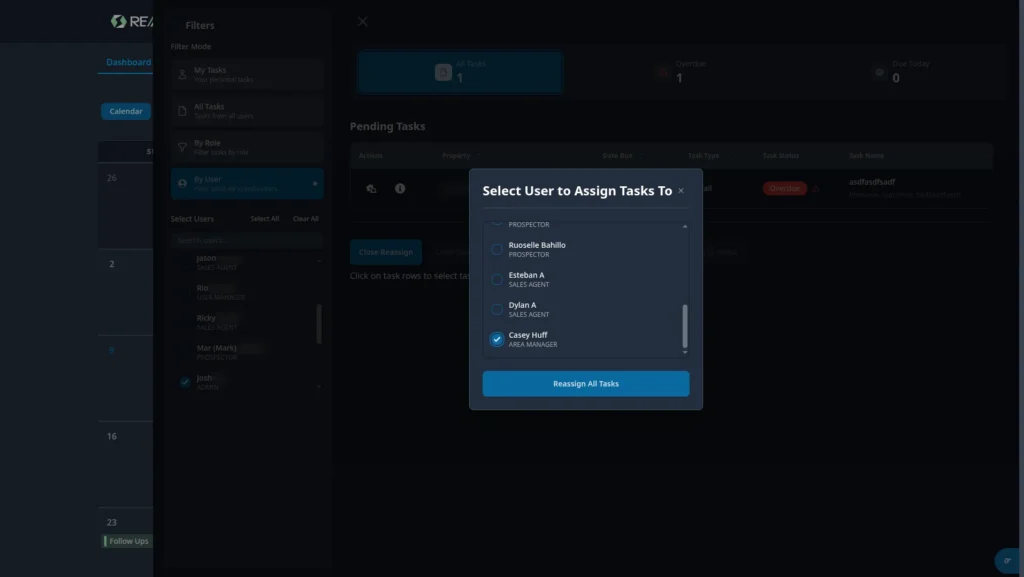
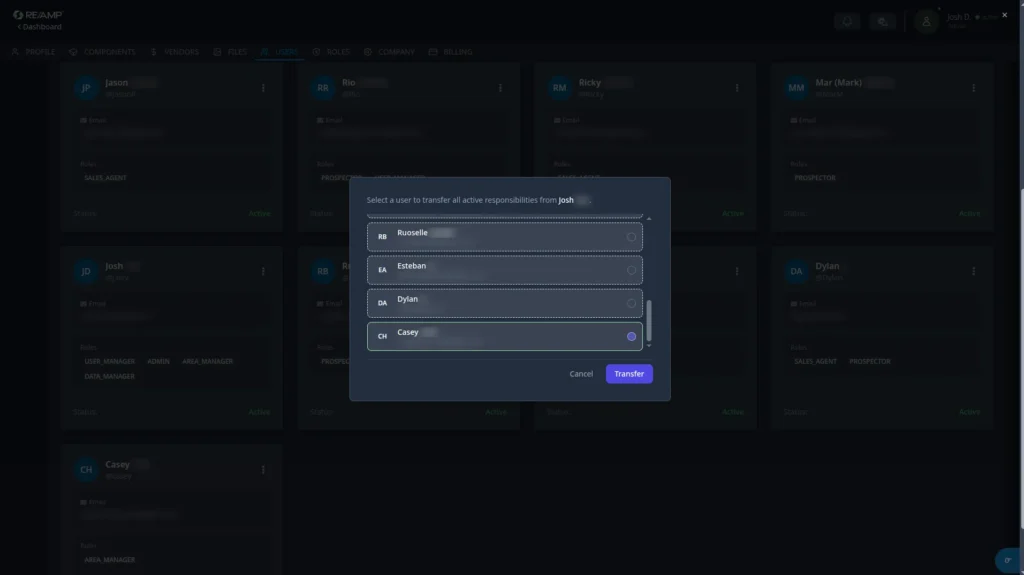
RE/AMP lets you quickly shift responsibility from one user to another so properties and their outstanding work can keep moving.
Instead of manually opening individual properties and rebuilding assignments, you can transfer responsibility in one action.
The property stays intact. The outstanding work stays intact. The history stays intact.
Only the person responsible changes.
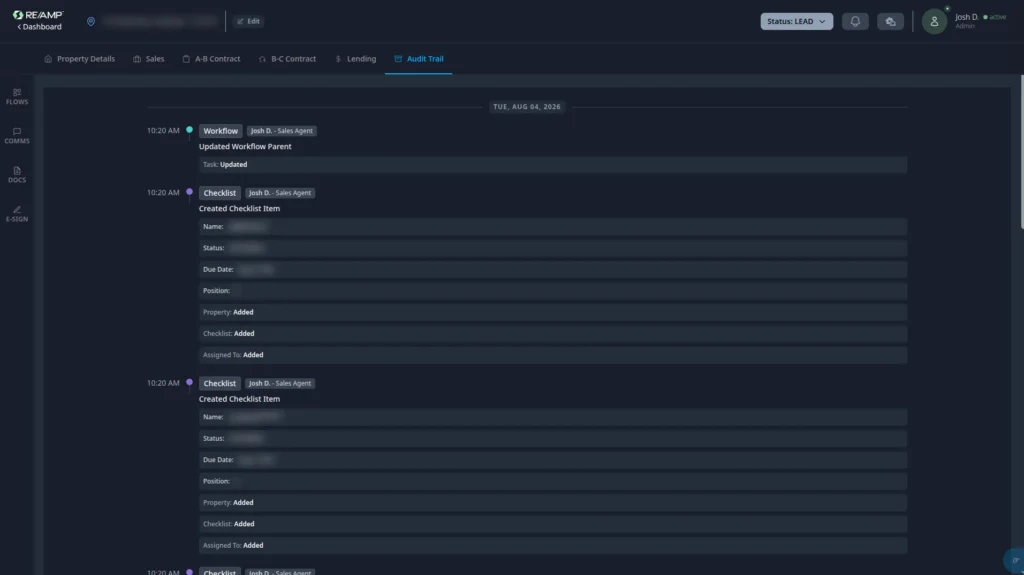
A Complete Activity History
Every property has a history.
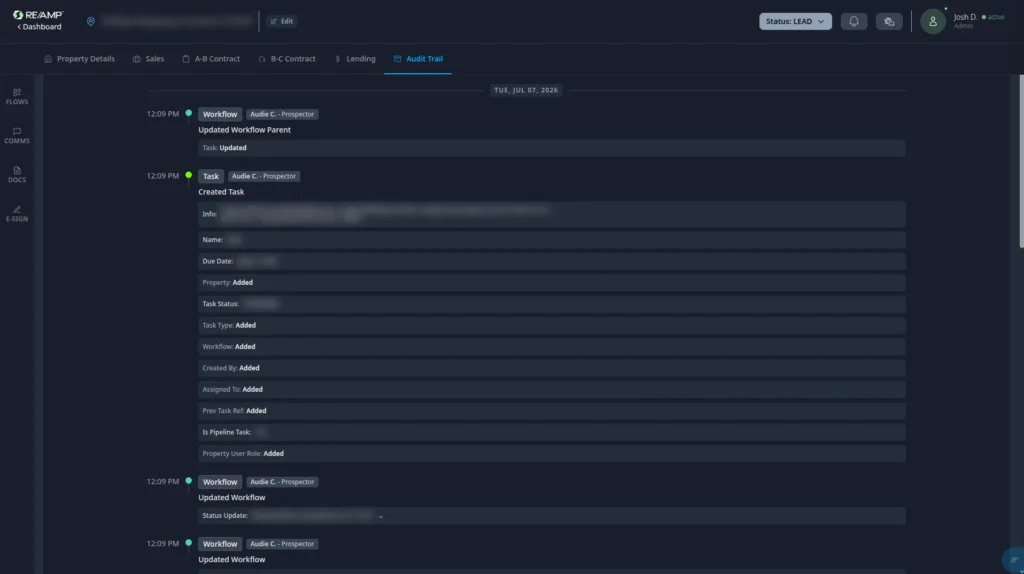
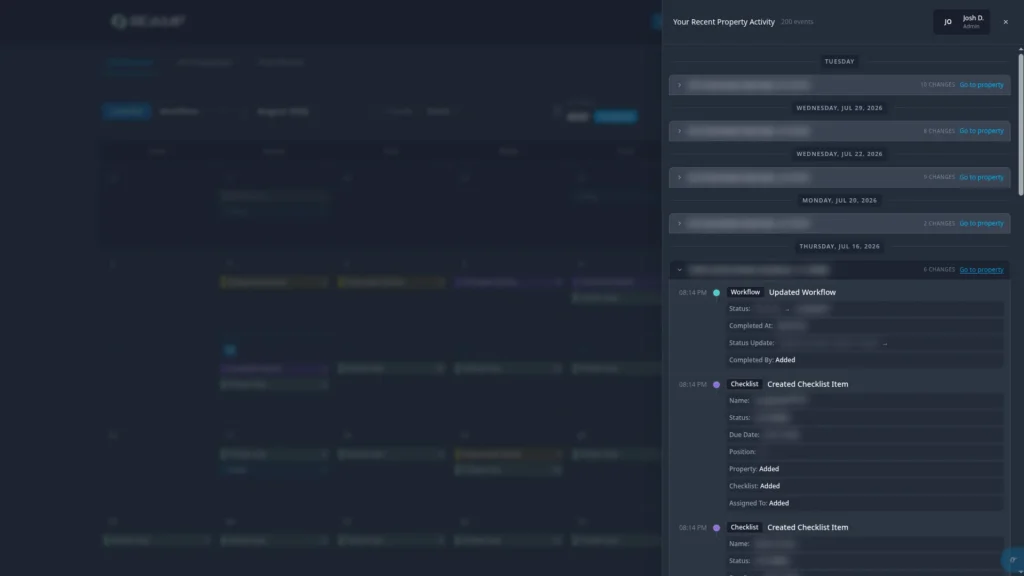
RE/AMP records activity so your team can see what happened, who performed an action, and when it happened.
That history provides context when someone needs to understand how a deal reached its current state.
You can also review a user’s recent activity across properties, making it easier to understand what work has been performed without manually opening every property.
And because the activity logs contain usable information rather than simply acting as a visual timeline, individual entries can be copied and referenced elsewhere when needed for reporting, documentation, or internal communication.
How Tasks And Accountability Work
1. Create The Task
A task is created for a property and assigned to the appropriate team member.
2. Complete The Work
The assigned user performs the required action.
3. Continue Or Hand Off
Depending on the task configuration, completing the task requires the user to schedule the next action or transfer responsibility to another user.
4. Record The Activity
The completed action becomes part of the property’s history and the user’s activity record.
The result is a continuous chain of work rather than a collection of disconnected reminders.
A Real-World Example
Imagine a representative is responsible for following up with a property owner after an offer is sent.
The follow-up task is assigned, but before the representative completes it, they leave the company.
In a traditional system, someone may have to search through their tasks, identify which properties they were responsible for, and manually determine what still needs to happen.
With RE/AMP, responsibility can be shifted to another user while preserving the property’s existing history and outstanding work.
The new team member can immediately see what needs to happen, while the company retains the record of what happened before the handoff.
Why Task Accountability Matters
1. Prevent Orphaned Work
Tasks have clear ownership and are designed to lead to another action or deliberate handoff instead of silently disappearing.
2. Make Employee Transitions Easier
When someone joins, changes roles, or leaves the company, responsibility can be shifted without rebuilding the underlying property records.
3. Onboard New Team Members Faster
New employees can understand what needs to happen by following the existing tasks and property history instead of relying entirely on verbal instructions.
4. Maintain A Defensible Record
When questions arise about a property months later, your team can review the activity history to understand what happened, who performed the work, and when.
5. Create Accountability Without Micromanagement
Managers don’t have to constantly ask whether something was done. The system records the work and keeps responsibility visible.
Frequently Asked Questions
About Tasks & Accountability
Yes. Tasks can be assigned to the team member responsible for completing the work.
Depending on the task configuration, the user may be required to schedule the next task or transfer responsibility to another user.
Yes. Responsibility can be shifted to another user without manually rebuilding the property's task history.
Yes. Activity is recorded as part of the property's history and can also be viewed through a user's recent activity.
Yes. The property's activity history provides a record of actions performed throughout its lifecycle.
Keep Your Team Accountable Without Slowing Them Down
They should make ownership clear, keep the next step visible, and preserve the history of the work that has been done. RE/AMP connects tasks, properties, users, and activity into one system so your team can keep deals moving while maintaining accountability at every step.